Project BREAKDOWN
BRINGING RESET TO MAGIC THE GATHERING
DATE UPLOADED: April 2026
PROJECT TYPE: Personal Project
PROJECT FOCUS: Illustration
PROJECT DESCRIPTION
What started as a simple assignment that I created for my concept art students at Syntra AB in Belgium, ended up becoming a personal passion project for myself. I brought my RESET universe into the world of Magic the Gathering as a fun way to expand my illustrative portfolio while teaching my students about illustration.
The first part of this project can be viewed through this video.
The idea for this assignment emerged when I noticed that several students in my concept art course were passionate about trading card games such as Magic: The Gathering and Pokémon. During lunch breaks, we often found ourselves discussing our favorite cards, which naturally led to the question: why not create our own?
Since the course already included an illustration module, it felt like a perfect opportunity to turn that enthusiasm into a structured learning experience. Inspired by the students’ excitement, I developed an assignment that guided them through the entire creative process—from initial thumbnails to the final illustration. This approach allowed them to revisit core composition principles while strengthening their storytelling skills.
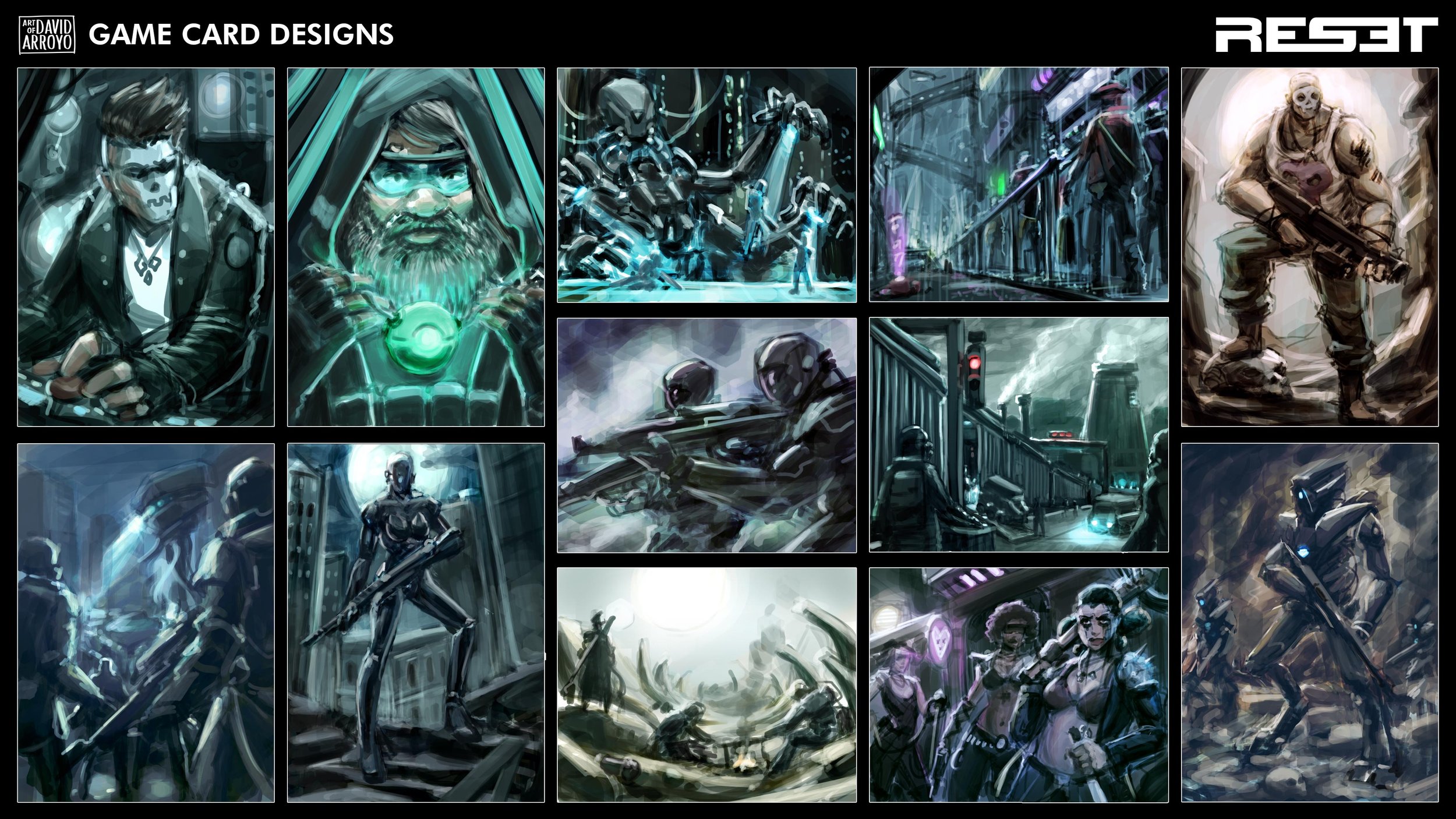
The assignment unfolded over 11 sessions, during which students developed their ideas, documented their concepts, created mood boards for reference, and progressed step by step through the thumbnailing process. They were free to choose an existing trading card game to design for, or to create an original concept for those who preferred more creative freedom. As you can see, I took this opportunity to integrate my RESET universe into the assignment.
HOW IT ALL STARTED
ILLUSTRATING THE FIRST CARD

Once the thumbnailing phase was complete, students selected their three strongest concepts and developed them into final illustrations, one by one. To support this process, I created my own card designs alongside them, providing live demonstrations throughout. My work was projected onto a large classroom screen, allowing students to follow each step in real time.
To make the learning experience even more accessible, I recorded the entire process and uploaded it to my YouTube channel, enabling students to revisit the material whenever needed. The first part of this process can be viewed in the video featured at the top of this project breakdown.
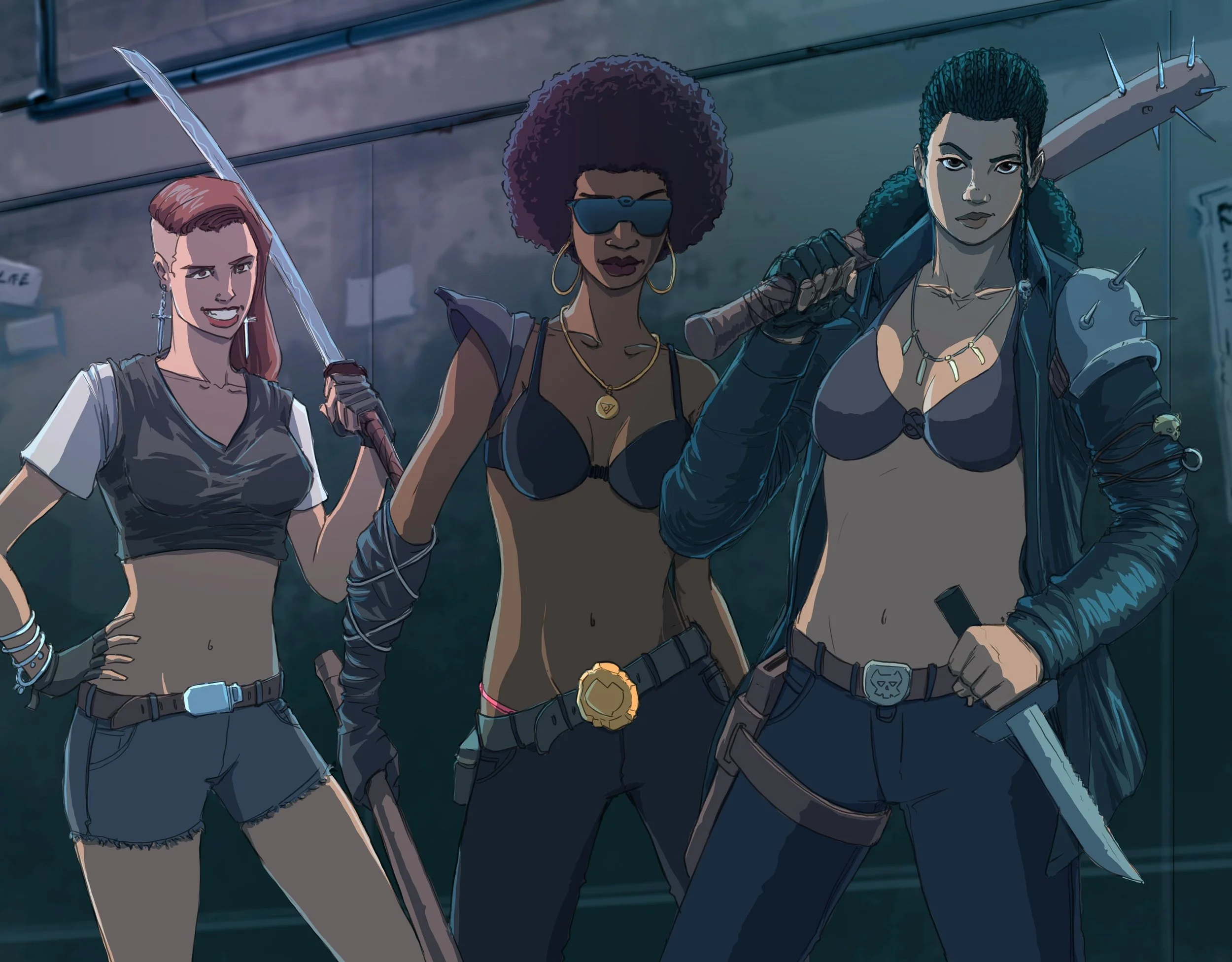
For my own work, I began by creating a series of exploratory thumbnail paintings based on visual ideas from my RESET universe. These evolved into a set of three illustrations, the first of which you can see right here. It features a group of girls from a small but dangerous gang known as the Cyanide Razor Dolls, who specialize in kidnapping and ransoming their victims.
At the same time, this project allowed me to expand my illustration portfolio—something I knew would be essential as I continued developing the many stories within my RESET universe. It also served as a valuable testing ground to explore different art styles, helping me define the visual tone and overall aesthetic that best fits a project of this scale and ambition.
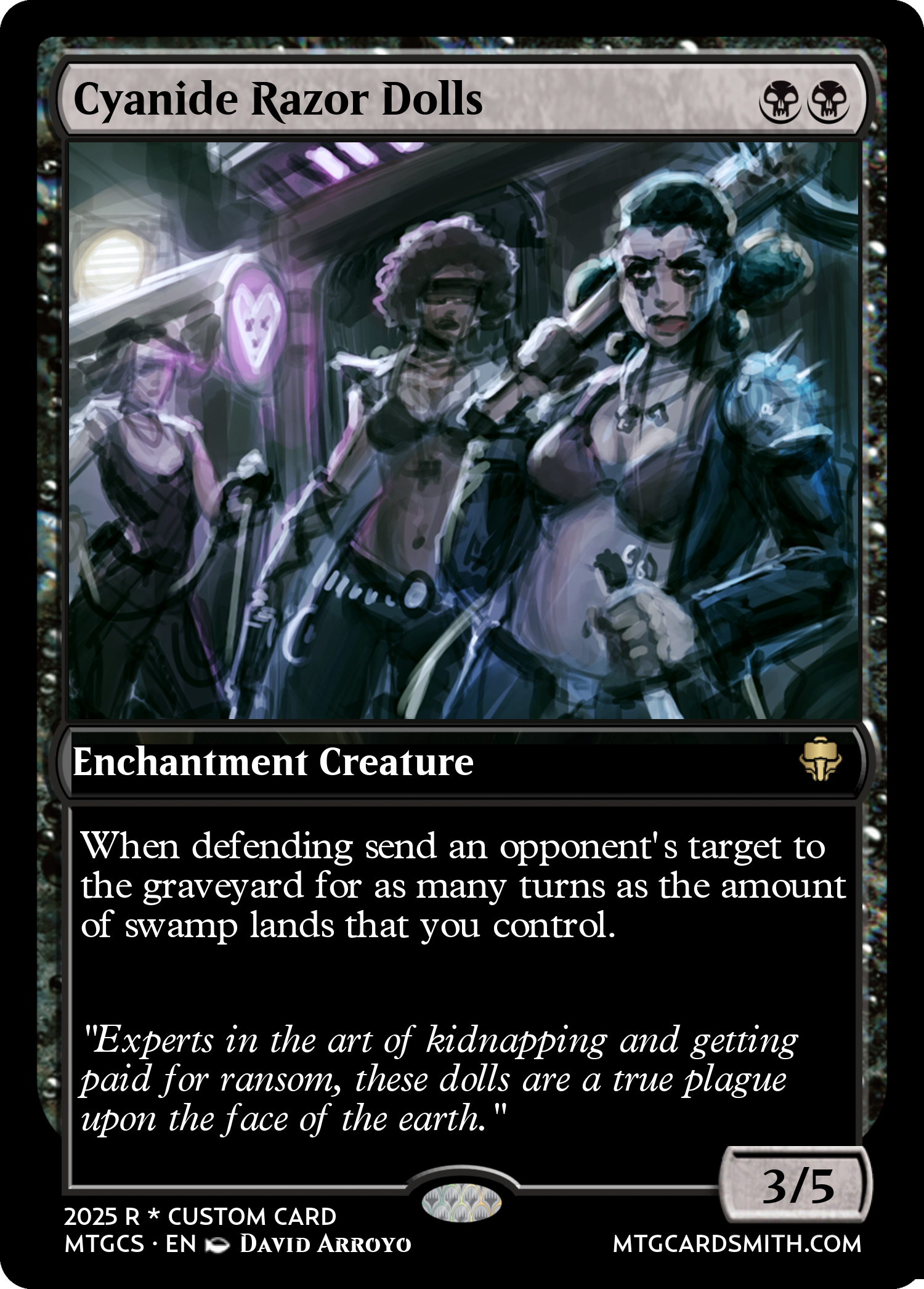
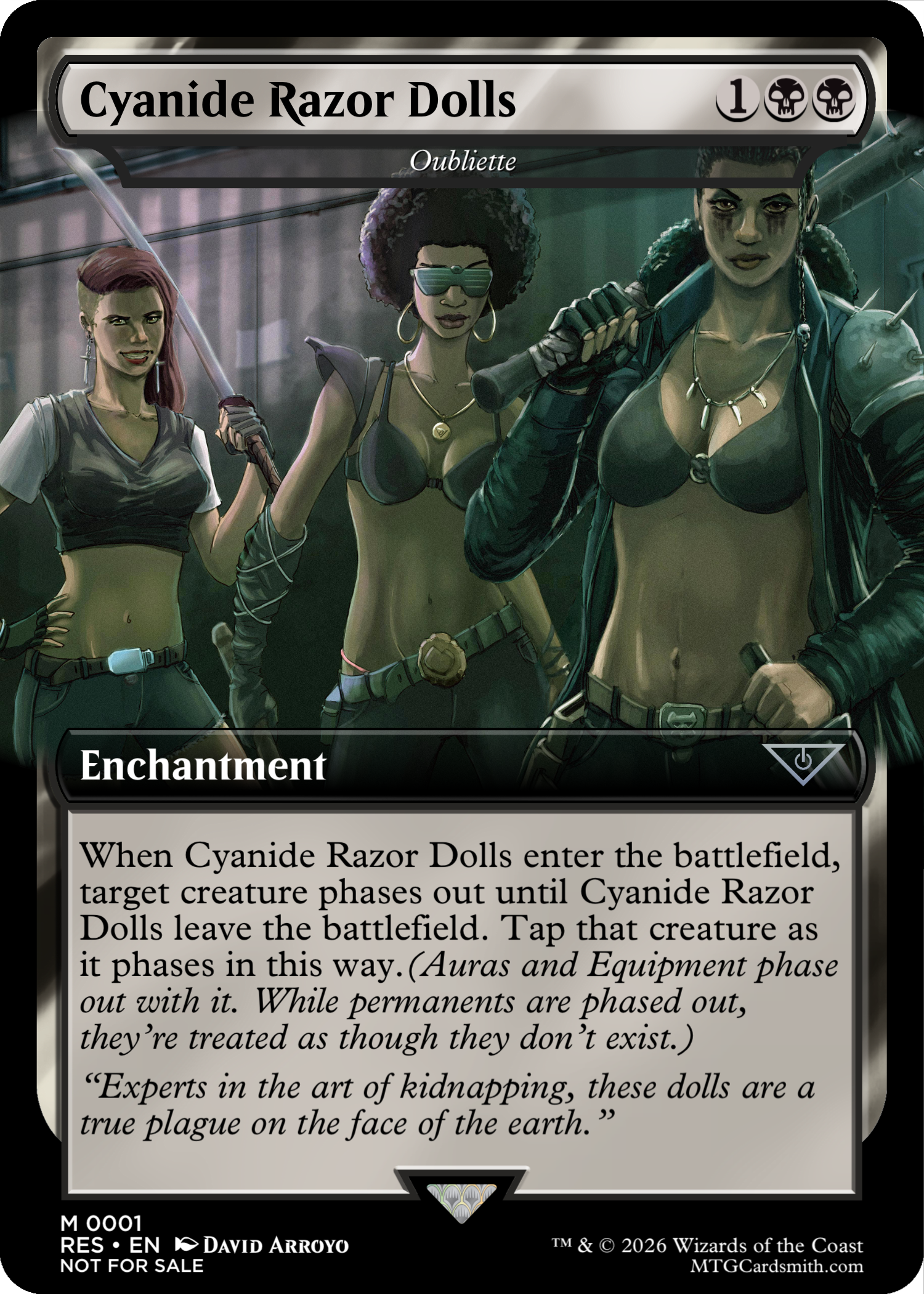
Here you can see how I first tested the card design with my thumbnail painting, and later on I replaced it with the final illustration and text based on a existing Magic the Gathering card called “Oubliette”. Below you can view how the illustration was made within this YouTube making of video on my channel.
One of the more interesting aspects of this illustration is how different visual directions emerged throughout the process. At one stage, the piece took on a distinctly anime-like quality due to the way I approached the shading. My initial method focused on color blocking and applying lighting through simple, cell-shading principles—an approach that works very well for stylized visuals, but is less suited for achieving realism. As a result, this illustration naturally leaned more toward an illustrative style rather than a fully realistic one.
Because I tend to save multiple iterations during my workflow, I was able to capture and share this particular stage, which can also be seen in the YouTube video mentioned above. While I wouldn’t consider it a finished piece, it clearly demonstrates how different styles can surface during the exploratory phase, especially when searching for the right visual direction for a larger project.
This was also valuable for students to witness in class, as it offered an honest look at the creative process behind the scenes. There’s often a misconception that artists move directly toward a polished final result, but in reality, that clarity only comes after multiple iterations and the gradual refinement of a consistent workflow.
ILLUSTRATING THE SECOND CARD
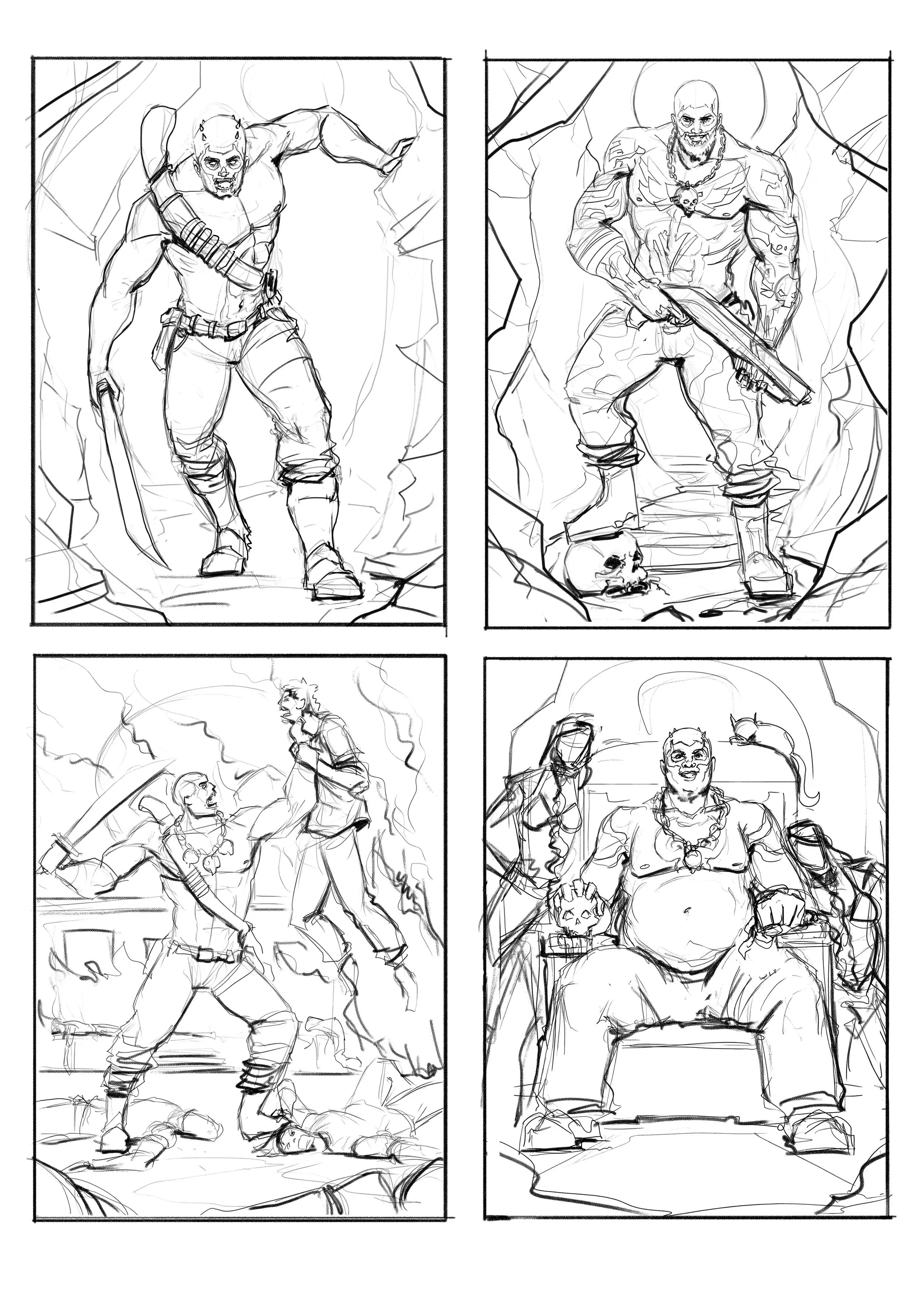
For the second illustration, I went through a redesign phase during the sketching process. While I initially liked the painted thumbnail shown at the beginning of this project breakdown, exploring alternative ideas led me to a different direction in both pose and storytelling. The original composition felt more like a staged photoshoot, so I shifted toward something more dynamic and confrontational—placing the character in a pose where he appears to be chasing the viewer. I also introduced a subtle blood trail on the ground, implying that it belongs to you, the viewer, to heighten the sense of tension and immersion.
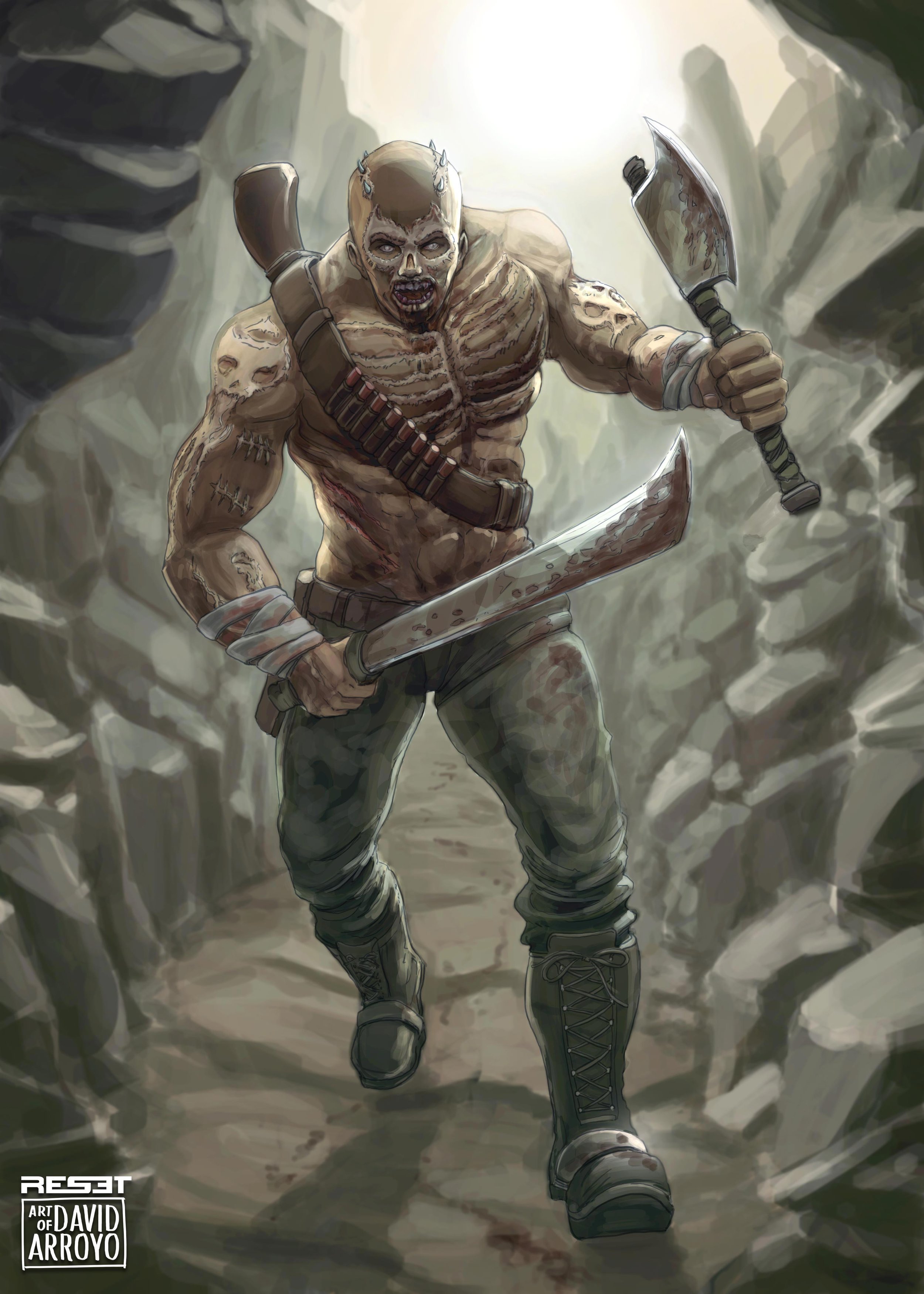
These early sketches offer a glimpse into the character’s identity and background. He is one of many berserkers from a hyper-violent nomadic tribe known as the Acid Skulls. They practice ritualistic cannibalism, marking their bodies with tribal tattoos burned into their skin using acid. After consuming their victims in communal ceremonies, they strip the remains and collect the skulls as trophies—symbols of dominance that extend even into the afterlife. Living far from civilization in harsh, desolate lands, they have been shaped into ruthless and feral beings.
As with the previous illustration, you can view the making of process within the YouTube video below. It takes you through all the individual steps up until the final result.
As I reached the final result, the illustration began to evoke the kind of aesthetic you might find in worlds like Fallout or Borderlands. The nomadic, psychopathic nature of the character naturally pushed it in that direction. At the same time, it still felt true to my original vision of what an Acid Skull Berserker should look like. That influence didn’t come as a surprise, as both of these IPs have, to some extent, inspired elements of the RESET universe I’ve been developing over the years.
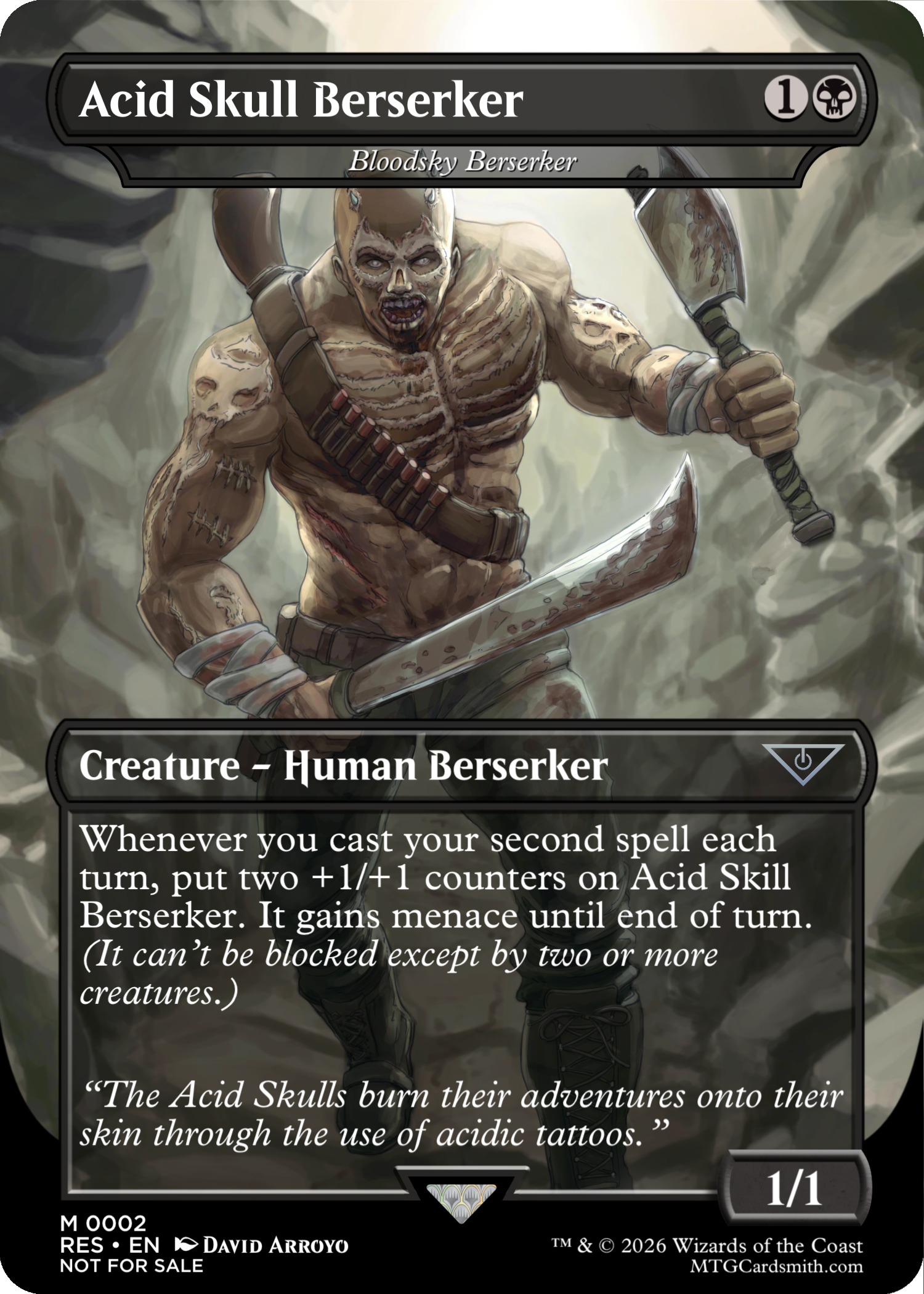
Since this was part of an illustrative assignment within the concept art course I was teaching, the next step was to translate the artwork into a game card. As a long-time fan of Magic the Gathering, I decided to stay consistent with my previous approach. I explored existing playable cards within the game and looked for one that aligned with the personality and narrative of the Acid Skull Berserker. With over 30,000 unique cards available, finding a suitable match wasn’t difficult.
Rather than designing entirely new gameplay mechanics, I chose to ground the piece within Magic’s existing framework. This allowed me to treat the card as a reinterpretation (also called a reskin) of the “Bloodsky Berserker,” maintaining both creative and mechanical coherence.
ILLUSTRATING THE THIRD CARD
Due to time constraints during the concept art course, I wasn’t able to complete my third illustrative demo in class. Instead, I chose to prioritize providing feedback and guidance to my students as they developed their own illustrations. As a result, I postponed the creation of the third piece and returned to it later.
Around nine months afterward, I revisited the project in preparation for the next group of students entering the course. This also presented a valuable opportunity to further expand my illustration portfolio. Balancing life as a father of four while teaching extensive hours each week inevitably requires a certain level of creativity in time management—often combining multiple goals into a single focused effort.
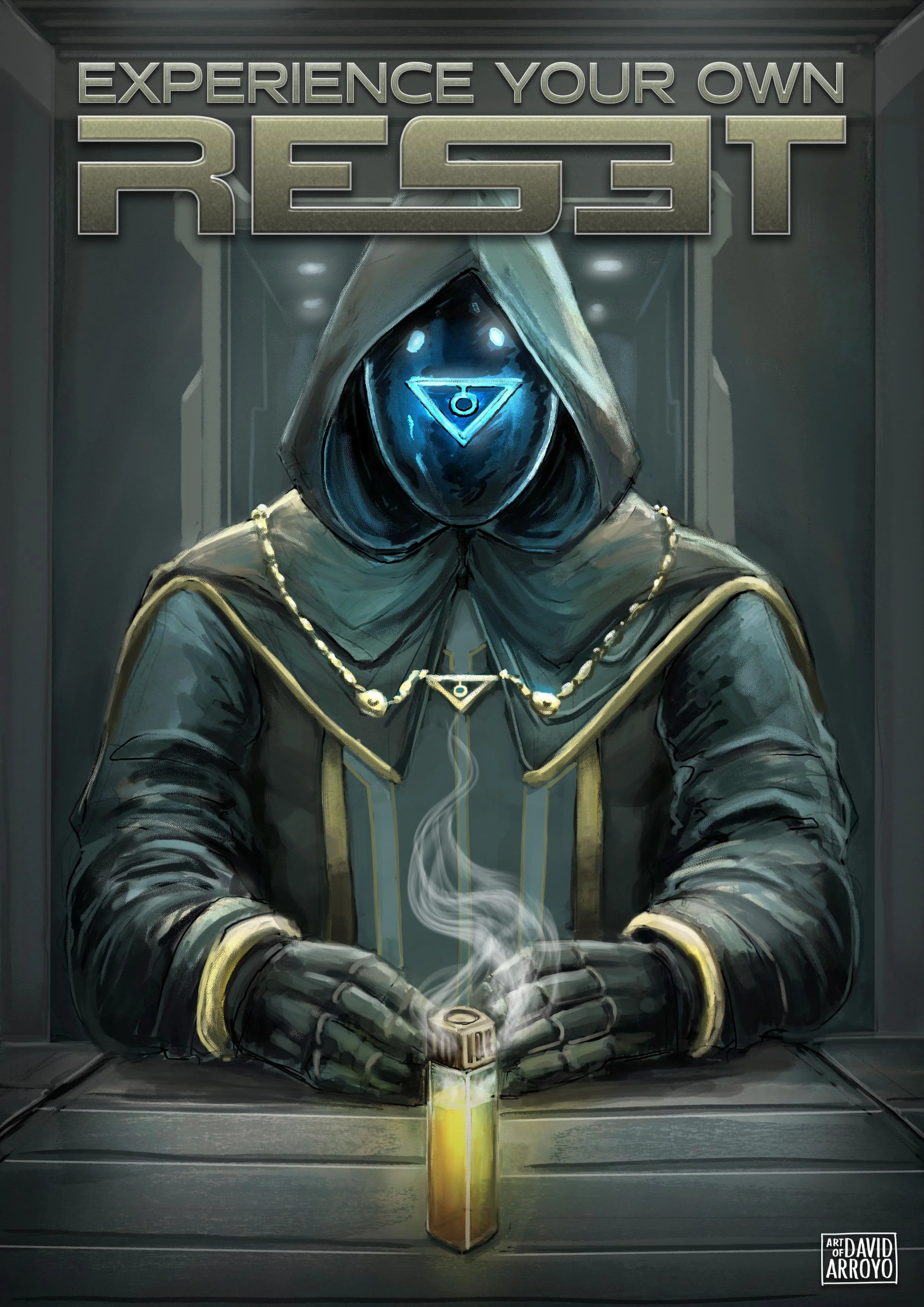
For this third illustration, I decided to move away from the original painted thumbnails created at the start of the project and instead begin a completely new piece from scratch. The intention was to develop an illustration that could also serve as visual marketing for the RESET universe. This time, I focused more directly on communicating the core concept behind what a “RESET” represents within the IP.
In essence, the RESET process draws inspiration from something akin to a Catholic confession. An individual sits across from a guardian (as depicted in the image) and shares their personal struggles. However, in this world, those experiences are recorded through advanced nanotechnology contained within a glowing liquid held in a vial. Once vaporized and inhaled, the nanotech integrates with the individual’s brain, guiding them through carefully constructed, highly controlled dream states. Within these dreams, their thought patterns are gradually reshaped, helping them confront and overcome their inner conflicts.
This system is employed by the Union—a global governing structure within the world of RESET—as a means of guiding and regulating its citizens.
As with the previous two illustrations, I recorded the entire process and shared it on my YouTube channel. You can watch this workflow in the video featured here.
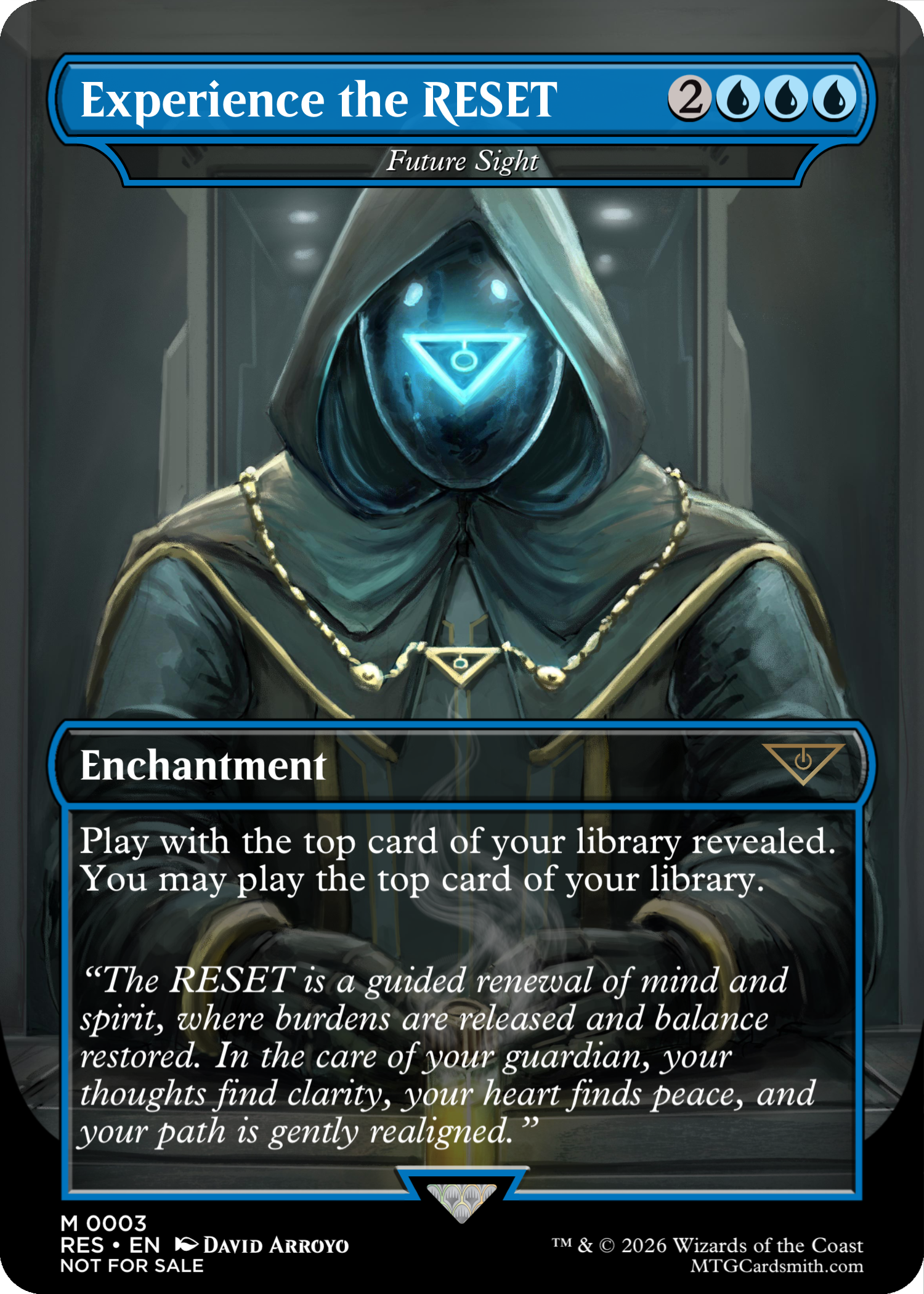
For the card design, I once again drew inspiration from existing cards within Magic the Gathering, selecting one whose mechanics aligned closely with the concept of this piece. In this case, “Future Sight” proved to be the most fitting choice for a reskin, both thematically and mechanically.
If you’ve been following all three cards closely, you may have noticed that I also designed a custom set logo for the RESET universe. This symbol—featuring a triangle with a connected circle at its center—represents the core identity of the RESET ideology that you can discover more about by reading RESET lore.
THE FINAL RESULT
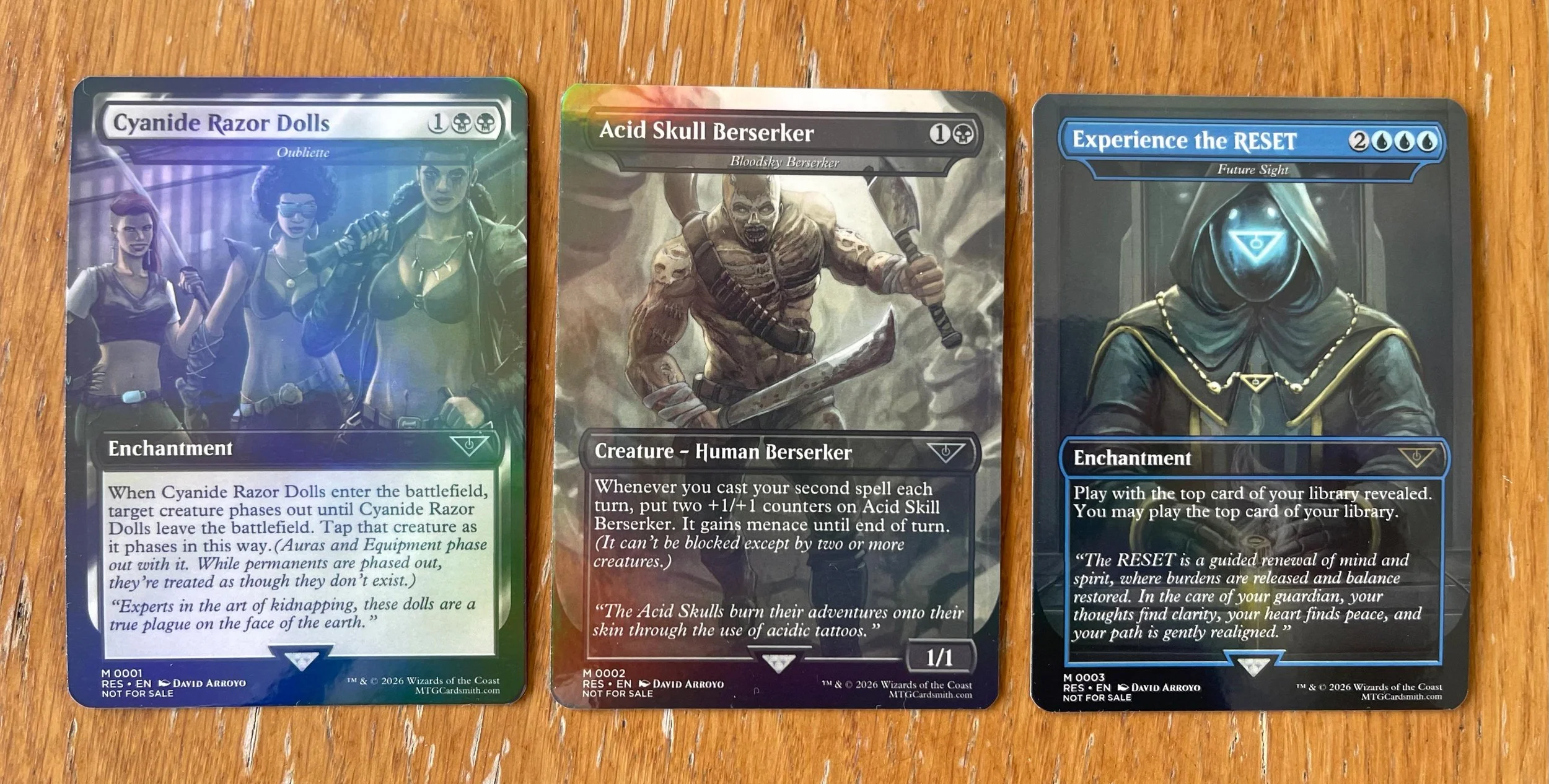
At the end of this project, I ended up with three reskins for existing Magic the Gathering cards. I focused these reskins around my own RESET universe and gave them a unified feel and look in order to make them look as if they were part of a set. As for the students, they handed in their own three illustrations (including the game card versions), and their painted thumbnails that served as a preparation for the illustrative side of the assignment.
As for myself, I used MTG Card Smith — a website that allows you to use Magic the Gathering card elements and assemble your own cards that look almost identical to the real thing on top of your existing illustrations. As an added service they also print your cards, and you can even add a foil layer to them, which is what I did as you can see in the image below.